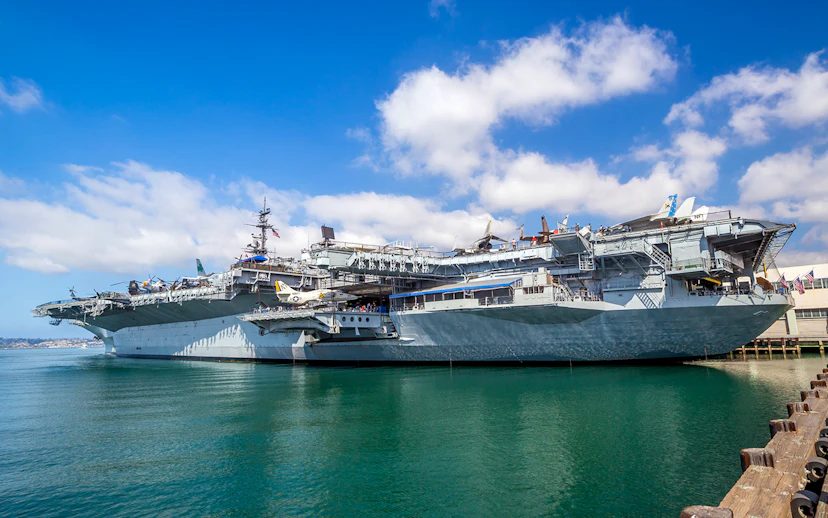
How to visit USS Midway Museum
USS Midway Museum is a decommissioned aircraft carrier best known for its flight deck packed with restored naval aircraft and the chance to explore a real working warship from bridge to engine room. It’s a bigger, more physical visit than many people expect, with steep stairs, tight passages, and enough exhibits to easily fill half a day. The key difference between a rushed visit and a great one is sequencing the bridge, flight deck, and below-deck spaces well. This guide helps you time it, route it, and avoid the usual bottlenecks.
Quick overview: USS Midway Museum at a glance
If you want the short version before you book, these are the details that actually change your day.
- When to visit: Monday–Sunday, 10am–5pm. The first 60–90 minutes after opening is noticeably calmer than 11am–2pm, because bridge lines, simulators, and the ship’s narrow lower corridors all start backing up at once.
- Getting in: From $22 for standard entry. Guided tour options start from about $65 per person. Advance booking is smart year-round, and it matters most on summer weekends, holidays, and school-break dates.
- How long to allow: 3–4 hours for most visitors. The bridge, simulators, and full below-deck engineering spaces push it toward the longer end.
- What most people miss: The chapel, sailor berthing spaces, and the newer engineering exhibits below deck add far more to the visit than many people expect.
- Is a guide worth it? Yes, if you want command-space context and real sailor stories; otherwise, the included audio tour does a good job for a standard self-guided visit.
🎟️ Tickets for USS Midway Museum sell out a few days in advance during summer weekends and major holidays. Lock in your visit before the time you want is gone.
Jump to what you need
Where and when to go
How much time do you need?
| Visit type | Route | Duration | Walking distance | What you get |
|---|---|---|---|---|
Highlights only | Hangar deck intro → Voices of Midway theater → flight deck aircraft → exit | 2–2.5 hours | 1.5km (0.9 mile) | You get the carrier’s biggest visual moments and bay views, but you’ll skip the bridge, much of the lower ship, and the deeper day-in-the-life story. |
Balanced visit | Hangar deck → theater → flight deck → bridge → crew quarters and galley → exit | 3–4 hours | 2.5km (1.6 miles) | This adds the command spaces and the human side of life on board, which makes the ship feel more complete without committing to every technical exhibit. |
Full exploration | Hangar deck → theater → flight deck → bridge and CIC → simulators → berthing, chapel, galley, engine and engineering spaces → exit | 4.5–5.5 hours | 3.5km (2.2 miles) | You see almost everything public, including the spaces most visitors miss, but it’s a stamina-heavy route with repeated stairs, low ceilings, and more waiting at popular stops. |
Which USS Midway Museum ticket is best for you
| Ticket type | What's included | Best for | Price range |
|---|---|---|---|
USS Midway Museum Skip-the-Line Tickets | Skip-the-line entry + self-guided audio tour with sailor stories, access to 30+ restored aircraft, flight simulators, exhibits, and onboard film | Visitors who want a focused, flexible museum visit with rich historical context | From $41 |
Combo: San Diego Zoo + USS Midway Museum | Entry to USS Midway + San Diego Zoo (3,700+ animals, exhibits), flexible visit dates | Families and travelers looking for a wildlife + history combo in one itinerary | From $109.48 |
Combo: San Diego Zoo Safari Park + USS Midway Museum | Entry to USS Midway + Safari Park (open-range habitats, tram safari), flexible visit options | Visitors who want a more immersive safari-style wildlife experience + naval history | From $113.05 |
How do you get around USS Midway Museum?
What happens inside USS Midway Museum?

Flight deck air wing
Era: World War II to the jet age
This is the carrier’s biggest visual payoff: a full outdoor deck lined with restored naval aircraft, helicopters, and sweeping views across San Diego Bay. It’s worth slowing down here not just for the planes, but for the scale of the ship itself — this is where Midway feels most like a working floating airfield. Most visitors rush the deck-edge views; pause for the sightlines toward Coronado and downtown before moving on.
Where to find it: Top deck, reached from the hangar deck stairways and elevators.
Bridge and Combat Information Center
Exhibit type: Command and operations spaces
The bridge and CIC give you the ship’s decision-making brain, from navigation to wartime command. This is where the visit shifts from ‘big aircraft museum’ to ‘real naval vessel,’ because you finally see how the ship was operated in live conditions. What most people miss is how quickly this line grows after the opening hour, which is why it’s one of the first spaces worth targeting.
Where to find it: Above the flight deck island structure, accessed from the upper deck route.
Voices of Midway theater
Exhibit type: Immersive battle film
The 15-minute theater presentation gives historical context early enough to make the rest of the ship feel coherent, not just impressive. It uses immersive effects and firsthand storytelling to ground the carrier in the wider history of naval aviation and the Battle of Midway. Many visitors walk past it on the way to the aircraft, then realize too late that they’ve skipped the one stop that ties the visit together.
Where to find it: Hangar deck, near the main exhibit route after boarding.
Flight simulators
Ride type: Motion simulator and virtual reality experience
These are the visit’s most obvious family add-on, and they work best if you treat them as optional fun rather than the backbone of your route. Kids and aviation fans love them, but the real value is timing them well so they don’t break the flow of the main ship. The part people underestimate is the queue — it can eat into bridge or lower-deck time fast.
Where to find it: Hangar deck simulator area near the central interactive exhibits.
Crew berthing and galley
Exhibit type: Life-on-board spaces
These rooms show how 4,000 people lived inside what looks from the outside like a machine of steel and aircraft. The bunks, meal prep areas, and mess spaces are some of the ship’s most human exhibits, and they make the scale of daily life on board easier to grasp than the command rooms do. Many visitors skip them because they’re focused on aircraft, which is a mistake.
Where to find it: Lower decks, along the main ‘crew’s world’ route beneath the hangar deck.
Engine room and Midway’s Engineers exhibit
Exhibit type: Technical and sensory exhibit
This is one of the best below-deck sections because it shows the ship as an industrial system, not just a museum piece. The engine and engineering spaces are imposing on their own, and the newer engineering exhibit adds sound, atmosphere, and harder truths about shipboard labor. What many people miss is that this section is more memorable than expected precisely because it feels harsher, tighter, and less polished than the public decks above.
Where to find it: Lower engineering levels, reached through the below-deck exhibit route.
Facilities and accessibility
- 🎒 Cloakroom / lockers: Bring only a small day bag, because every bag is screened at entry and bulky luggage is awkward on the ship’s ladders and low-ceilinged corridors.
- 🚻 Restrooms: The most reliable restrooms for planning your route are on the hangar deck, which is also the easiest level to regroup on before heading up or below.
- 🍽️ Café / snack bar: Jet Fuel Java on the hangar deck is the on-board stop for coffee, snacks, and light lunch items, and it works best as a mid-visit refuel rather than a destination meal.
- 🛍️ Gift shop / merchandise: The main gift shop is near the exit and is strongest for Navy memorabilia, flight-jacket patches, model aircraft, and ship-specific souvenirs.
- 🅿️ Parking: Metered parking is available near the pier, but spaces go quickly on weekends, holidays, and school-break mornings, so opening hour is the least stressful arrival.
- ♿ Mobility: Accessibility is partial rather than full, because some main public areas are easier to reach but the bridge, many lower-deck compartments, and steep ladders are not wheelchair-friendly.
- 👁️ Visual impairments: The included audio tour is the most useful support on site, and you can collect it near the hangar entrance in English, Mandarin, Spanish, Japanese, French, and German.
- 🧠 Cognitive and sensory needs: The calmest window is the first hour after opening, while the loudest and most crowded areas are usually the simulators, theater queue, and midday below-deck passages.
- 👨👩👧 Families and strollers: Strollers work best on the wider hangar areas, but the route is not pushchair-friendly end to end because many of the most interesting sections rely on steep stairs and narrow hatches.
Midway works well for children who like machines, big spaces, and hands-on exploration, because it feels more like discovering a real ship than moving through a traditional museum.
- 🕐 Time: 2–3 hours is realistic with younger children if you focus on the flight deck, hangar exhibits, and one below-deck section instead of trying to cover everything.
- 🏠 Facilities: The hangar deck is the easiest family base because it combines restrooms, snacks, and wider spaces where everyone can reset before tackling stairs again.
- 💡 Engagement: Let children start with the aircraft and cockpit stops first, because that usually buys you more patience later for the history-heavy sections below deck.
- 🎒 Logistics: Bring sunscreen, a light layer, and one compact bag, because the flight deck is exposed and bulky strollers or backpacks become annoying fast in the ship’s tighter routes.
- 📍 After your visit: Seaport Village is an easy family reset a few minutes away if you want snacks, open space, or a calmer waterfront walk afterward.
Rules and restrictions
Practical tips
- Book at least 2–3 days ahead for summer weekends, holidays, and school-break dates; weekday off-season visits are easier to book late, but the quiet opening-hour window is still the first to go.
- If you’re on a timed or dated ticket, arriving late usually matters less for entry than it does for routing, you can still visit, but you lose the calmest window for the bridge, theater, and first flight-deck photos.
- Save your energy for the lower decks and bridge; many people burn time early on the exposed aircraft deck, then rush the crew spaces and engine areas when their legs are already tired.
- Tuesday and Wednesday mornings usually work best because the ship feels looser before school groups, simulator queues, and the bridge line begin stacking up toward late morning.
- Bring sunscreen, a light layer, and a compact bag; the top deck is exposed to wind and sun, while security and the ship’s ladders are much easier with one small day bag than a full backpack.
- Eat before boarding or use Jet Fuel Java midway through the visit; once you leave for Seaport Village or the Embarcadero, you can’t simply wander back in on the same visit.
What else is worth visiting nearby?
Eat, shop and stay near USS Midway Museum
- On-site: Jet Fuel Java on the hangar deck handles coffee, snacks, and quick lunch basics well enough for convenience, but it’s a mid-visit refuel rather than a meal worth planning around.
- Carnitas’ Snack Shack - Embarcadero (6-min walk, 1004 N Harbor Dr): Casual burgers, tacos, and fries on the waterfront, making it the best quick stop if you want something fast after the museum.
- Portside Coffee & Gelato (6-min walk, 1004 N Harbor Dr): Coffee, pastries, and gelato, which makes it especially useful before your visit or as an easy family reset afterward.
- Edgewater Grill (8-min walk, 825 W Harbor Dr): Seafood and California staples with bay views, better suited to a slower lunch or early dinner once you’re done climbing around the ship.
- Pro tip: Eat before 11:30am or after 2pm if you’re using the nearby Embarcadero spots, because the same midday window that crowds Midway also crowds the waterfront lunch places.
- USS Midway Museum gift shop: Navy-themed books, flight-jacket patches, model aircraft, and ship-branded souvenirs near the exit make this the best place for something specific to the museum.
- Seaport Village: A few minutes south on foot, it’s better for broader San Diego souvenirs and casual waterfront browsing than for military memorabilia.
The Embarcadero is a very convenient base if Midway is one of your priority sights and you want to walk everywhere along the waterfront. It’s especially good for short stays, cruise departures, and visitors who’d rather avoid parking logistics. The trade-off is price, because waterfront hotels usually cost more than nearby neighborhoods inland.
- Price point: Mostly upper-mid-range to upscale on the waterfront, with better-value stays once you move a few blocks inland.
- Best for: Short San Diego stays where you want Midway, harbor walks, and ferry access without needing a car.
- Consider instead: Little Italy for stronger food and slightly wider hotel choice, or the Gaslamp Quarter if you want nightlife and easier access to multiple downtown attractions.
Frequently asked questions about visiting USS Midway Museum
Most visits take 3–4 hours, though a focused highlights route can be done in about 2 hours. If you add the bridge, simulators, and the full lower-deck engineering spaces, you can easily stretch the visit past 5 hours. The ship is much larger inside than it looks from the pier.
Yes, booking in advance is the safer move, especially for summer weekends, holidays, and school-break dates. Same-day entry is sometimes available, but prebooking helps you avoid ticket-window delays and protects the calmest part of the day for your route.
Yes, it’s worth it on busy days if you want to get on board quickly and keep the bridge and flight deck in your quietest window. On midweek mornings it matters less, but on weekend late mornings the time saved can make the rest of the visit feel noticeably smoother.
Arrive 15–20 minutes early if you’ve booked ahead. That gives you enough time for bag screening, audio guide collection, and getting oriented before the bridge line starts building and the hangar deck gets crowded.
Yes, but keep it small. All bags are screened at entry, and the ship’s ladders, low ceilings, and narrow interior passages are much easier to handle with a compact day bag than with a large backpack or bulky tote.
Yes, personal photography is allowed across most public areas. The flight deck is one of the museum’s best photo spots, but you’ll want to keep gear compact in the bridge approach and lower-deck passageways where space is tight and traffic keeps moving.
Yes, and it’s a very group-friendly attraction. The self-guided format works well for school groups, extended families, and military reunions, and private docent-led tours are the better option if your group wants structure and shared storytelling rather than splitting up.
Yes, it works especially well for school-age children who like aircraft, machines, and hands-on exploration. The best family plan is usually 2–3 hours focused on the flight deck, hangar deck, and one lower-deck section instead of trying to force every room into one visit.
It is partially accessible, not fully. Some main public areas are easier to reach, but the bridge, many lower-deck spaces, and numerous steep stairways and narrow hatches mean you should expect limits rather than a full end-to-end accessible route.
Yes, both on board and within a short walk. Jet Fuel Java on the hangar deck is the easiest on-site option, while Seaport Village and the Embarcadero give you better variety if you eat before boarding or after you finish the museum.
The included audio tour is available in English, Mandarin, Spanish, Japanese, French, and German. It’s worth picking up as soon as you board, because it helps the ship’s technical spaces and lower decks feel connected instead of random.
Yes, parking is available near the pier, but it’s metered and fills quickly on busy days. If you want the least stressful arrival, aim for opening hour or use Santa Fe Depot and walk the final 8–10 minutes along the waterfront instead.